The Offcut Is the Point: Buying Hong Kong’s One-of-One Leather Accessories
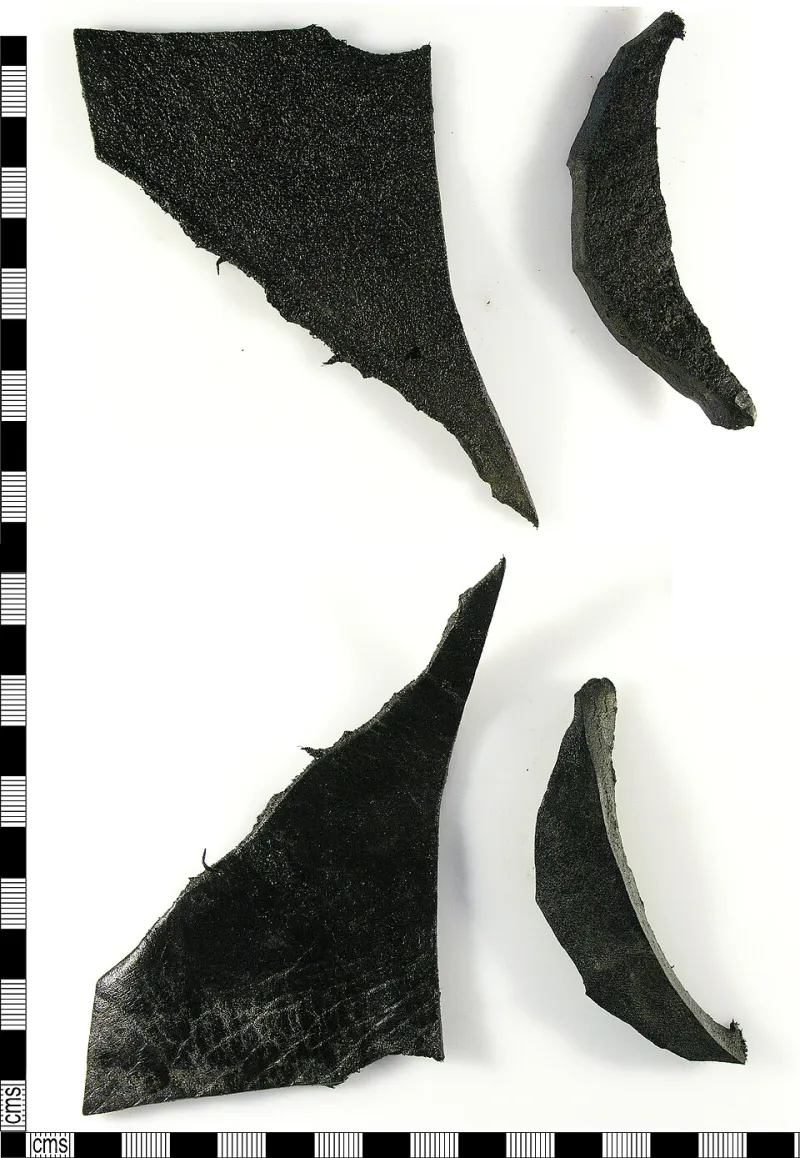
Photo: Museum of London, Kate Sumnall, 2013-09-30 14:08:41, CC BY-SA 2.0, via Wikimedia Commons
A card case arrives from Hong Kong with a faint diagonal line across the front. One corner is a shade deeper than the rest. The grain tightens near the top edge. None of it looks like damage. It looks like the leather had a previous life — because it did. In many small Hong Kong workshops, that piece began as the leftover from a larger bag panel, a cutting table offcut, or the last usable section of a hide. The scrap bin, in other words, is not the end of the line. It is a design studio with a very small inventory.
That matters if you are shopping from the U.S. and see a “one-of-one” card case, cord keeper, or key fob listed with a photo that will never repeat. The appeal is obvious: you get a singular object, often at a friendlier price than a full-size bag. The catch is equally obvious once you start thinking about it. You are not buying a standardized product with a standardized spec sheet. You are buying a small piece of leather that has been read, sorted, and reworked by a maker. Here is how to do that well.
Why the variation is not a defect
In a large factory, matching dye lots and uniform grain are quality-control goals. In a small workshop working from leftovers, variation is the raw material. A dye lot can shift from one offcut to the next. A hide can have scars, stretch marks, or a change in temper where an animal flexed. The maker can either discard those sections or design around them. The good ones design around them.
So when a Hong Kong maker lists a card case as one-of-one, read the photos like a map. A color shift may mean two offcuts were joined. A visible grain change may mean the maker placed the denser section at a wear point. A faint mark may be a natural scar rather than a scuff. None of these are automatic red flags. They are clues about how the piece was built. The question is not “Is this perfect?” It is “Was this variation handled deliberately?”
One-off does not mean made up as they go
The best leftover-leather pieces are not random. A maker who works this way usually has a system: sort by thickness, sort by temper, sort by color family, then cut small goods that suit what is left. A key fob can tolerate a smaller, stiffer offcut. A cord keeper can use a narrow strip. A card case needs enough clean surface for folded edges and stitching. If the piece looks like it was cut from whatever was closest to the workbench, ask why. If it looks like the offcut dictated the size and the maker respected that limit, that is a good sign.
Ask whether the item is truly one-of-one or one of a small run. Some makers use “limited” loosely. A genuine one-off usually means the exact leather will not be repeated. A small run might mean five pieces from the same offcut. Neither is better, but they are different purchases. If you are buying because you want the only one, confirm it. If you are buying because you like the leather, a small run is fine.
The questions that separate a keepsake from a regret
Start with the leather itself. Is it full-grain, top-grain, or a corrected grain? Is it vegetable-tanned, chrome-tanned, or a hybrid? A soft, stretchy offcut may be lovely in a pouch but a poor choice for a card case that will live in a pocket. A stiff, dry piece may crack at a fold. You do not need to become a leather chemist. You do need to know what you are buying.
Then ask about edge finishing. This is where small goods live or die. A painted edge can look crisp, but on a one-off it may be harder to refinish later. A burnished edge can be renewed with wax and friction. A raw edge is a design choice, not automatically a shortcut, but it will show wear faster. Ask how the edge was finished and whether it can be maintained. On a $60 key fob, a painted edge is fine. On a $180 card case, you want a clear answer.
Ask about stitching, too. Is it hand-stitched or machine-stitched? What thread size? Are the stitches tight and even, or decorative and loose? Stitching is not just looks. It is the structure holding a small piece together. If the maker cannot tell you the thread or the stitch length, that is not necessarily a dealbreaker, but it is information.
Finally, ask about repair. A one-of-one piece is harder to replace than a standard product. That makes aftercare more important, not less. Can the maker re-edge the piece? Replace a zipper pull or a snap? Re-stitch a corner? Some Hong Kong workshops offer repair as part of the deal. Others will refer you to a local leather worker. Either is workable if you know upfront. What you do not want is a maker who treats a repair question as an insult.
Buying from the U.S. without guessing
Photos can hide a lot. Ask for a close-up of the edge, the stitching, and any natural marks. Ask for dimensions in inches, not just centimeters. Ask whether the leather has been treated with a conditioner or topcoat, because that affects how it ages in a dry U.S. climate. If the maker offers a lining, ask what it is. An unlined card case can be beautifully slim, but it will stretch differently than a lined one.
And ask what “leftover” actually means in that workshop. Some offcuts are clean remnants from a bag panel. Some are returns from a tannery. Some are experimental dye lots. The story matters less than the condition. A maker who can tell you where the leather came from and why it was suitable for the piece is a maker who has thought it through.
The pleasure of these accessories is not that they are perfect. It is that they are specific. A key fob cut from the last of a vegetable-tanned hide, a card case with a grain change that tells you where the animal moved, a cord keeper in a color that will not come around again — these are small, useful objects with a visible history. Buy them for that. Ask the boring questions. Then carry the thing until it earns its own marks.