Leather That Learned to Breathe: What Hong Kong's Wet Air Teaches a Dry-Climate Closet
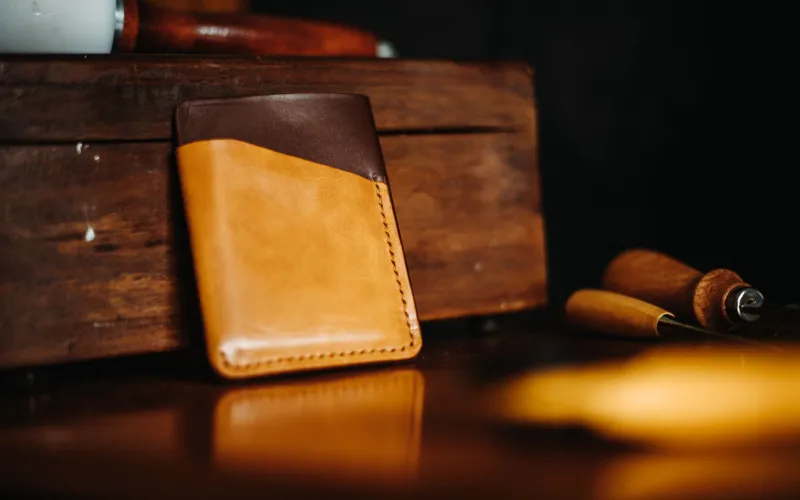
Walk into a Hong Kong workshop in July and the air hits you like a warm towel. Relative humidity sits somewhere near 80 percent, the walls sweat, and the leather on the bench has already begun its second act. Now imagine that same bag six months later in Tucson, where the air is so dry your knuckles crack in February.
Two climates, one piece of leather, two very different lives. Makers here talk about this constantly, because the goods they build are designed for the wet side of that equation and then get shipped to people living on the dry side. The habits don't always travel cleanly.
Damp Air Is a Fast-Forward Button
Leather is skin, and skin responds to water. In Hong Kong's summer, vegetable-tanned pieces darken within weeks. Edges soften. Creases settle in fast, and the oils that give a hide its depth migrate around the surface on their own schedule.
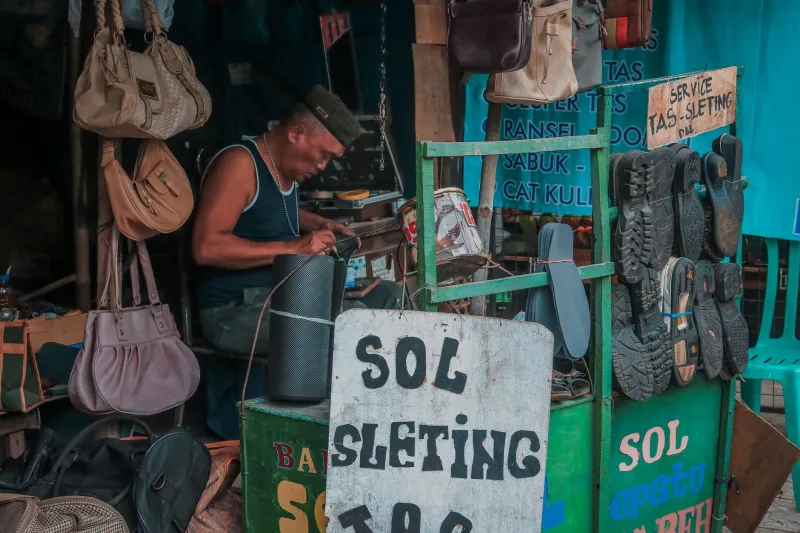
A bagmaker in Sham Shui Po described it plainly: in this climate you don't so much break a bag in as watch it break itself in. The trade-off is vigilance. Moisture that speeds up patina also invites mold, and mold is the one thing that genuinely ruins a piece. That's why local workshops keep dehumidifiers running overnight and why finished goods sit in breathable cotton bags rather than plastic.
The Two Failure Modes
Here's the useful part for anyone shopping from the States. Leather fails in opposite directions depending on where it lives.
- Too wet: mold blooms in the lining, stitching wicks water, hardware tarnishes, and the leather goes limp and sour-smelling.
- Too dry: the hide loses plasticizers, cracks along flex points, and edges dry out to a chalky finish.
Hong Kong makers spend their energy fighting the first problem. A US buyer in a desert climate is fighting the second — often without realizing the habits they've copied were built for the opposite situation.
Why Over-Conditioning Is the American Mistake
This comes up in nearly every conversation. A well-meaning owner in a dry city reads that leather needs conditioning, so they condition monthly. The result is a bag that feels greasy, attracts dust, and darkens unevenly because the leather can only absorb so much.
Makers here suggest the opposite rhythm for arid closets: condition when the leather tells you to. Look for a matte, thirsty look on high-wear corners. Feel the strap where it bends. If it still has a slight cool, supple give, leave it alone. Most bags in Denver need a light cream twice a year at most — spring and late fall, when indoor heating and outdoor air are both at their driest.
Thin cream beats heavy oil. Wax-based products sit on the surface and protect; oils soak deep and can oversaturate. And never condition a bag you haven't cleaned. Dust under a coat of cream becomes an abrasive paste.
Rotation Does More Than Storage Ever Will
Hong Kong closets are small, which accidentally produces good behavior. Fewer bags in rotation means each one rests, dries out fully between uses, and doesn't marinate in its own moisture.
The dry-climate version of that habit is about rest, not drying. A leather bag worn daily never gets a chance to release the moisture from your hands, your body heat, and the occasional rain. Give it a day off. Stuff it loosely with unbleached paper — not newspaper, which transfers ink — and let it sit in open air rather than a sealed box. Cedar chips help in humid rooms; in dry ones they mostly just smell nice.
Uneven Aging Is a Signature
There's a particular anxiety in the US market about patina that isn't perfectly even. A darker patch where the bag rubs your hip. A lighter ring where the strap folds. A crease that took six months to form.
Hong Kong makers read those marks as evidence. Each one records a specific wear pattern — which shoulder, how full, how often. A bag that darkens uniformly across every surface has usually been sitting in a closet. A bag with a distinct geography has been used.
That's worth keeping in mind if you're choosing between two pieces. Full-grain and vegetable-tanned leathers show everything; they are honest materials. Corrected-grain and coated finishes hide the marks and, in exchange, age in a flatter, more uniform way. Neither is wrong. They're just different promises.
A Small Starter Kit
If you're shopping from a dry city and want a piece that will hold up on both sides of the equation:
- Full-grain leather with a visible grain, not a corrected surface.
- Cotton canvas or unlined interiors — linings trap humidity.
- Solid brass or stainless hardware, which tolerates swings in temperature better than plated zinc.
- Stitched, not glued, construction at stress points, so a repair is possible in year five.
None of that is exotic. It's just the checklist Hong Kong workshops apply by default, because the local climate won't forgive shortcuts.
The Takeaway
A leather good built for wet air arrives at your door over-engineered for dryness, and that's a gift. Treat it to less product, more rotation, and a little breathing room, and it will age the way the maker intended — slowly, unevenly, and in your handwriting rather than the factory's.
The patchy bits aren't damage. They're the record of where you've been.