The Home Office, Small-Batch: Seven Hong Kong Desk Pieces Worth Keeping
Remote work did not just move work home. It moved office gear into our living spaces. The result, for a lot of US workers, is a desk full of plastic clips, synthetic mats, and branded accessories that felt temporary the day they arrived.
Small-batch Hong Kong design offers a different model. These are not matching sets, and they are not meant to be bought all at once. They are individual pieces with enough weight, texture, and repairability to make the home office feel less disposable. Here are seven worth considering—each with the artisan story, the case against the mass-market alternative, and a styling tip for minimalist or maximalist setups.
1. Hand-Stitched Leather Cable Tidy
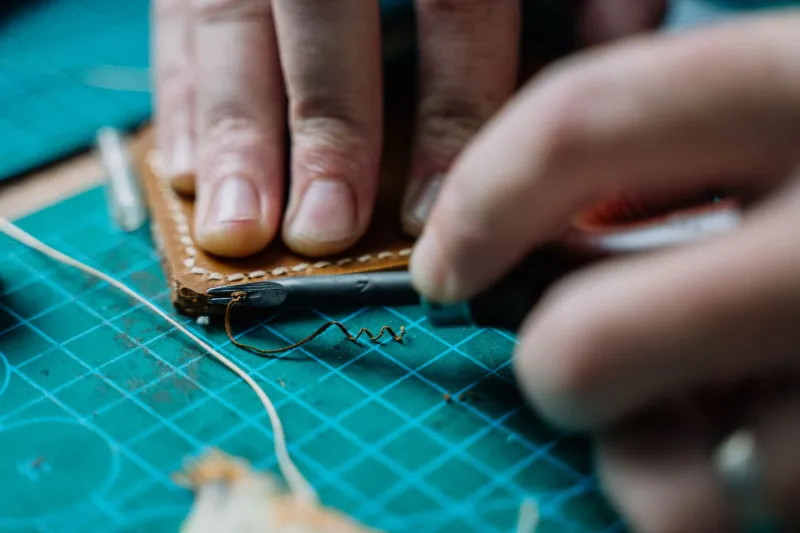
A leatherworker in Sham Shui Po cuts these from offcuts and saddle-stitches each one by hand, finishing with a solid brass snap. The story is small-batch practicality: use the material that would otherwise be wasted, build it to soften rather than crack, and make the closure replaceable.
Why it beats the mass-market alternative: Velcro cable ties collect lint and lose grip. Plastic clips snap. A leather tidy develops a patina and can be re-stitched if the snap fails. It also adds a little visual calm to a tangle of charging cords.
Integration tip: Minimalists should choose black or natural leather and keep just one on the desk. Maximalists can use a contrasting thread color and leave two or three out as part of the desk composition.
2. Wheel-Thrown Ceramic Pen Rest
A ceramicist in Yuen Long throws small stoneware rests in batches, letting the glaze Pool and break slightly on the edges. No two are identical, which is the point. The clay body is heavy enough to stay put when you drop a pen into it.
Why it beats the mass-market alternative: Plastic pen trays slide around and look tired quickly. Ceramic has weight, absorbs sound, and does not flex or yellow. If it chips, it can often be sanded or kept as a wabi-sabi detail.
Integration tip: Minimalists can use one as a single landing spot for pen and stylus. Maximalists can group it with a brass tray and a small notebook cover for a layered desktop.
3. Waxed-Canvas Laptop Sleeve
A canvas sewer in Kwun Tong makes sleeves from 18-ounce waxed canvas with a wool felt lining and a standard-size zipper that can be replaced. The construction leaves enough seam allowance for a future repair, which is rare in this category.
Why it beats the mass-market alternative: Neoprene sleeves are cheap, but they degrade, hold heat, and offer little structure. Waxed canvas develops a patina, resists light rain, and can be re-waxed. A replaceable zipper means the sleeve does not die when the closure does.
Integration tip: Minimalists should pick a neutral waxed canvas and skip the extra pouch. Maximalists can add a contrasting repair patch or a leather zipper pull for a more personal look.
4. Solid Brass Catch-All Tray
A metalworker in Tai Kok Tsui folds and hand-sands solid brass trays, leaving them unlacquered so they develop a patina. The edges are softened by hand, and the surface is left slightly uneven—evidence of the press and the maker.
Why it beats the mass-market alternative: Acrylic trays crack. Plated metal chips and reveals a cheaper base. Solid brass can be polished, re-sanded, or left to age. It also gives keys, coins, and SD cards a designated home instead of letting them drift across the desk.
Integration tip: Minimalists can use one tray as the only desktop catch-all. Maximalists can cluster trays in different sizes and let the patina do the decorating.
5. Refillable Leather Notebook Cover
A leatherworker in Sheung Wan makes vegetable-tanned covers with an elastic closure and a replaceable insert. The cover is built to outlast dozens of notebooks, and the leather darkens with handling rather than peeling.
Why it beats the mass-market alternative: Branded notebooks are designed to be finished and replaced. A refillable cover turns the notebook into a long-term object. The leather can be conditioned, the elastic can be replaced, and the insert can be swapped without buying a new cover.
Integration tip: Minimalists should use one cover and one pen. Maximalists can pair it with a ceramic rest and a brass ruler for a desk that feels collected rather than coordinated.
6. Wooden Keyboard Wrist Rest
A woodworker in Sai Kung shapes wrist rests from local offcuts, finishing them with a food-safe oil and wax blend. The wood is sanded smooth but left with enough grain to feel alive under the wrist.
Why it beats the mass-market alternative: Gel wrist rests flatten, crack, and collect dust. Wood has a stable, warm surface that can be sanded and re-oiled. It also brings a bit of acoustic softness to a hard desk.
Integration tip: Minimalists should match the wood tone to the desk or keyboard. Maximalists can choose a contrasting grain and treat it as a sculptural element rather than a hidden support.
7. Hand-Felted Wool Desk Pad
A textile artist in Fo Tan felts merino wool by hand, using natural dyes and a dense, pressed surface. The pad is thick enough to soften the click of a keyboard and warm enough to make a cold desk feel less corporate.
Why it beats the mass-market alternative: Synthetic desk mats curl at the edges and trap static. Wool absorbs sound, resists odor, and can be spot cleaned. It is also a natural material in a category dominated by PVC and polyester.
Integration tip: Minimalists should choose a single neutral tone and keep the desk otherwise clear. Maximalists can use a saturated color as the base layer and build up with ceramic, brass, and leather.
Buy One, Use It Daily, Repair It
The point of small-batch desk gear is not to decorate a home office into submission. It is to replace the disposable default with a few objects that feel good to touch and can be maintained. Start with the piece you will use every day—probably the cable tidy or the laptop sleeve—and let the rest follow only if it earns its space. In a work-from-home setup, the best design is the kind you stop noticing because it simply works.