The Hangtag Is Only the First Sentence: Reading 'Made in Hong Kong' in 2026
A hangtag is a first sentence, not the whole story. That is especially true when the sentence is 'Made in Hong Kong.' For a US shopper browsing online in 2026, the phrase can feel like a promise: careful hands, small workshops, better materials, a break from the usual mall cycle. Sometimes it means exactly that. Sometimes it means a factory run in a city with a long manufacturing history, which is also a legitimate thing to buy. The useful skill is not memorizing a purity test. It is learning to read the label in context.
What the phrase actually covers
'Made in Hong Kong' speaks to where a product was manufactured. It does not automatically mean handmade, small-batch, independently owned, or designed in Hong Kong. Those are separate claims, and they can all be true at once, or only some of them can. A bag can be designed in Hong Kong and produced elsewhere. A wallet can be assembled in Hong Kong from imported leather. A ceramic mug can be made in a Hong Kong studio by one person. The label tells you where the making happened; the rest of the product page has to tell you how.
That distinction matters because 'designed in' and 'made in' are not interchangeable. Neither is 'assembled in' and 'handmade in.' A brand using 'designed in Hong Kong' may be completely transparent about overseas production, and that is fine. A brand using 'handmade in Hong Kong' should be able to explain what handwork means in its workshop: cutting, skiving, stitching, finishing, or all of the above. If the phrase is doing heavy emotional work but the page offers no specifics, treat it as a starting point rather than a conclusion.
Factory, studio, and the spectrum in between
Hong Kong's manufacturing story is not a quaint side note. The city spent decades making textiles, toys, plastics, watches, and leather goods at serious scale. Factory production is part of that history, not a betrayal of it. Small studios are also part of the story, especially now, when a new generation of makers is working with limited runs, repair services, and direct-to-customer sales.
The trick is not deciding that one is good and the other is bad. It is noticing which one you are looking at. A studio-scale operation often shows its limits in useful ways: a narrow color range, made-to-order lead times, one-person customer service, batch numbers, a repair policy written by the person who does the repairs. A larger factory run often shows up as broad sizing, deep stock, quick shipping, and consistent units across many colors. Neither signal is proof on its own. A small studio can keep stock on hand. A factory can produce a limited run. But the pattern of clues should match the story being told.
The words that do real work
Some label language is more concrete than others. 'Handmade' is a big claim, and it deserves a definition. Does it mean every stitch is sewn by hand, or that a machine is guided by hand? 'Hand-finished' might mean edge painting and burnishing, or it might mean a final polish. 'Small-batch' is not a regulated term; it can mean twenty pieces or two thousand, depending on who is talking. 'Atelier' and 'workshop' are atmospheric words, not certifications.
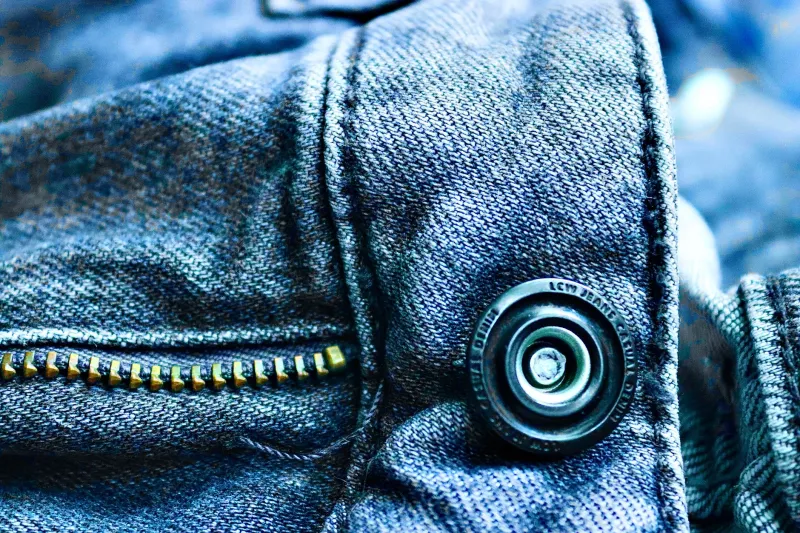
What tends to carry more weight is specificity. A maker's name or initials. A batch number. A stated leather mill or tannery. Hardware described by finish and supplier. Measurements taken from the actual sample. A care card that explains how to condition the leather or replace a zipper pull. A repair page with a real address and a real person to email. These details are harder to fake at scale, and they give you something to verify.
Clues on the product page
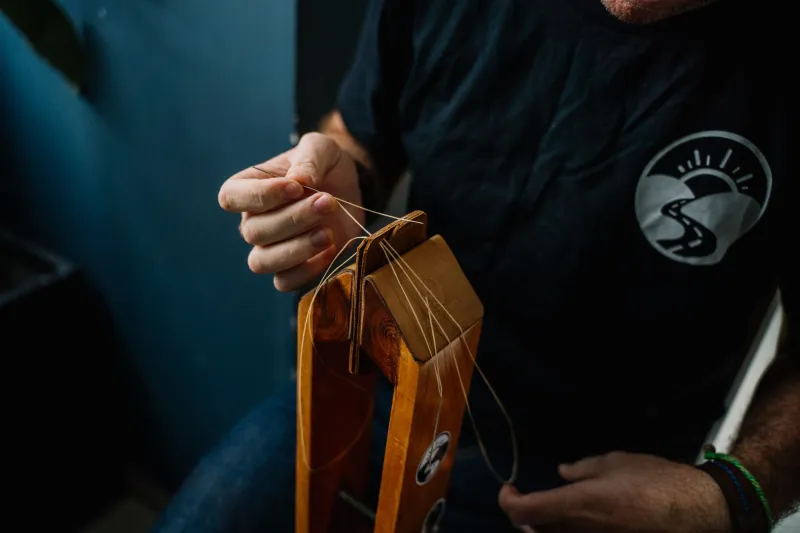
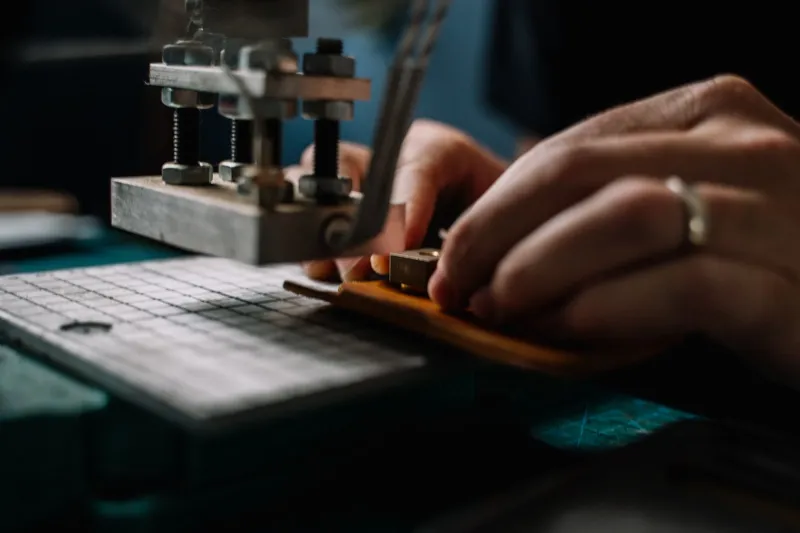
Photos help, but not in the way most shoppers think. A styled flat-lay tells you about taste. A bench shot tells you about process. Look for images that show cutting mats, edge paint, stitching clamps, or the messy middle of making. Look for copy that explains why a seam is where it is, or why a lining was left out. Look for a brand that names its materials and its limits. 'This leather will darken' is a better sign than 'premium quality.'
Mismatches are worth noticing. If a page says 'one maker, two hands' but offers forty styles, same-day shipping, and a different voice in every product description, ask a question. If it says 'small-batch' but never mentions a batch, a lead time, or a repair path, stay curious. That is not a accusation. It is just reading the room.
Questions to ask before checkout
A quick email or chat can tell you a lot. Who made this piece? Where in Hong Kong was it made? What does 'handmade' mean for this specific item? Is it in stock or made to order? What hardware is used, and can it be replaced? Do you offer repairs, and who does them? Can you share the batch size or a photo of the workshop? A brand that enjoys these questions will answer them plainly. A brand that only answers with mood words has told you something too.
For US shoppers, it also helps to ask about returns and shipping in plain terms. A gorgeous hangtag does not cancel out a confusing return policy. The label is part of the purchase, not a substitute for the practical stuff.
A label is a beginning, not a verdict
A local does not treat 'Made in Hong Kong' as a medal. They treat it as a direction. It says: look here, ask this, check the repair policy, see whether the scale of the story matches the scale of the operation. The phrase can point you toward a workshop that keeps a maker's initials inside the pocket, or toward a factory that has been quietly producing good goods for years. Both can be worth buying. The point is to know which conversation you are having before you click checkout.