The Quiet Friday: Why Hong Kong’s Small-Batch Makers Sit Out Black Friday

Photo: 방용빵빵 (Bangyongbbangbbang), CC BY 4.0, via Wikimedia Commons
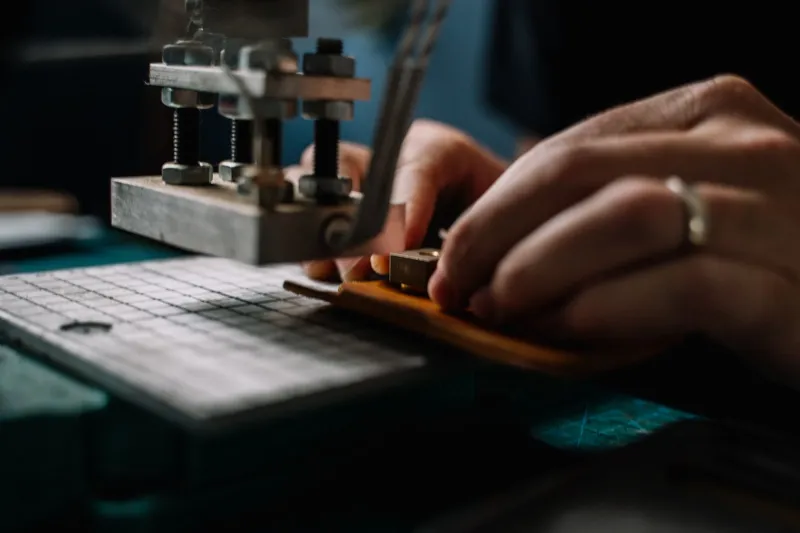
Black Friday has a sound. In the US, it’s the pre-dawn shuffle outside a big-box store, the refresh-hammer on a product page, the “only 3 left” warning that somehow appears before you’ve finished reading the first sentence. It is not, generally, the sound of a Hong Kong bagmaker trimming a strap by hand or a jeweler checking a clasp for the fourth time.
That’s the first thing to understand about Black Friday 2026 in the small-batch Hong Kong accessory world: many makers simply don’t participate. No doorbusters. No sitewide 40% off. No countdown timer designed to make you buy a wallet like it’s a flight deal. And that’s not because they’re above a sale. It’s because the math of their work doesn’t leave room for the kind of markdown that Black Friday has trained US shoppers to expect.
The markdown math doesn’t work
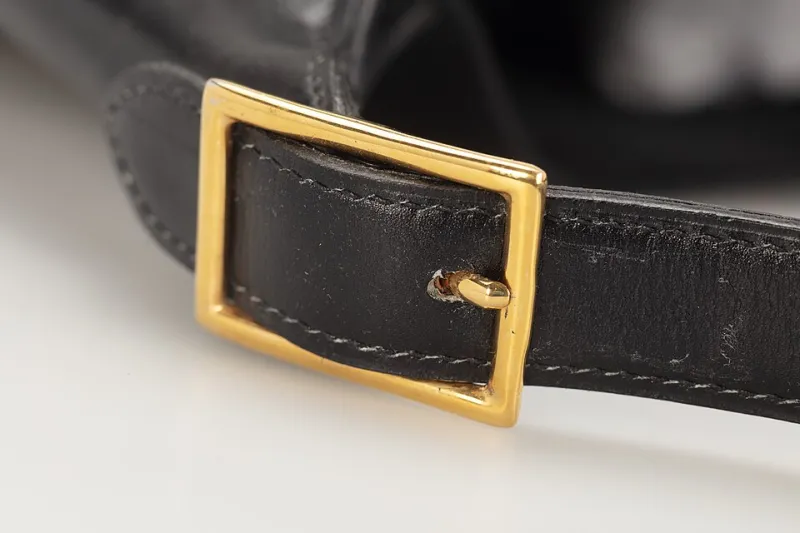
A mass-market accessory can be produced in huge runs, warehoused, and discounted because the unit cost was low to begin with. A small Hong Kong workshop making leather goods in limited batches is working with different numbers. The hide is bought in smaller quantities. The hardware is chosen for durability, not for whatever was cheapest that season. The person stitching the edge is also the person answering your email about strap length.
When a maker offers 50% off on a $180 cardholder, something has to give. Maybe it’s the leather. Maybe it’s the finishing. Maybe it’s the maker’s time. The more common outcome is that the piece was never priced to absorb that kind of cut in the first place. That’s why many Hong Kong artisans treat Black Friday as a normal working day — or a day to catch up on repairs, not to slash prices.
This can feel counterintuitive to anyone used to US holiday shopping. We’re conditioned to wait for the deal. But with craft accessories, the “deal” often arrives as a compromise somewhere you can’t see yet.
What small-batch makers do instead
In place of discounts, many Hong Kong workshops lean on the things that actually shape their business: made-to-order slots, limited seasonal runs, repair services, and straight talk about lead times. Some will open a small batch of a popular colorway and close it when the leather runs out. Others will offer complimentary conditioning or a hardware check for existing customers. A few will simply post a note explaining that prices are staying put and why.
That’s not a marketing trick. It’s a different rhythm. Instead of chasing a single frenzied weekend, these makers are trying to keep a steady flow of work that supports the people doing it. For US shoppers, that changes the question from “How much can I save today?” to “What am I actually buying, and how long will it take?”
The alternative playbook for craft shopping
If you’re heading into the 2026 holiday season and you want to buy a Hong Kong-made piece without translating doorbuster habits onto it, here’s a practical way to approach it.
1. Look for real small-batch signals
A maker who genuinely works in small runs tends to be specific. You’ll see leather names, hardware brands, stitch counts, dimensions, and honest notes about what changes from batch to batch. You’ll also see limitations: “This color is available until the hide runs out” or “Made to order in 10–14 days.” Vagueness is the tell. If every product page says “premium quality” and nothing else, the small-batch label may be decoration.
2. Ask about lead times before you fall in love
Made-to-order is not a dirty word, but it does require planning. A Hong Kong workshop may need a week or two to build your bag, plus shipping time to the US. That’s not Amazon Prime, and it’s not supposed to be. If you need a gift by a specific date, ask directly. A good maker will tell you what’s realistic. A great one will tell you when they can’t hit your date rather than take the order and hope.
3. Choose pieces worth waiting for
A craft purchase should clear a higher bar than a impulse buy. Ask yourself whether you’d still want the piece at full price in February. If the answer is yes, the wait is easier to justify. If the answer is no, the discount was doing the emotional work. Focus on items you’ll use weekly: a cardholder that fits your actual cards, a tote that handles your commute, a belt that can be resized later. Those are the pieces that make a small-batch price feel reasonable.
4. Don’t expect a repair-first maker to behave like a fast-fashion brand
Repair-first makers build with the assumption that the piece will come back to them at some point — for a new zipper pull, a restitched seam, a conditioned strap. That service model is part of what you’re paying for. It also means they’re less likely to push a new model every six weeks. If you want the newest thing constantly, this isn’t the lane. If you want something that gets better with use and can be maintained, it is.
5. Treat shipping and duties as part of the price
US shoppers ordering from Hong Kong should factor in international shipping and any applicable import charges from the start. A $200 bag doesn’t become a $200 bag if shipping adds $30 and duties add more. Build the landed cost into your decision. A fair small-batch price plus transparent shipping is still a better deal than a marked-down item that arrives with a loose stitch and no path to repair.
The quiet Friday is still a choice
None of this means you shouldn’t shop sales. If a US retailer has a Black Friday deal on socks or a kitchen gadget, go in good health. But craft accessories operate on a different clock. The Hong Kong makers who skip the markdown circus are offering something else: a smaller batch, a clearer story, and a piece that’s meant to stay in your closet longer than the weekend.
So if you’re browsing on November 27 this year and the site looks calm — no flashing banner, no “doorbuster” countdown — don’t assume you’re missing out. You may be looking at the actual point. The quiet is part of the product.